
18 Enterprise-Ready Long-Tail Keywords That Convert Better Than Broad Terms
For large organizations managing complex marketing operations, choosing the right keywords can make the difference between wasted budget and measurable ROI. Long-tail keywords offer precision targeting that broad terms simply cannot match, particularly when you need to track attribution across multiple departments, justify spend to stakeholders, and maintain compliance standards. This list focuses on strategies and keyword types that scale effectively for enterprise teams, helping you build campaigns that perform consistently across large organizations.
- Legiit for Enterprise Content Creation at Scale

When your organization needs hundreds of optimized content pieces targeting specific long-tail keywords, managing freelance writers and SEO specialists becomes a major operational challenge. Legiit provides a marketplace where enterprise teams can find vetted professionals who specialize in long-tail keyword research and content creation. The platform’s structure allows you to build relationships with multiple service providers, ensuring you have the capacity to execute large-scale content strategies without the overhead of hiring full-time staff. For companies running campaigns across multiple brands or geographic regions, this approach offers the flexibility to scale up or down based on performance data.
- Compliance-Specific Product Searches
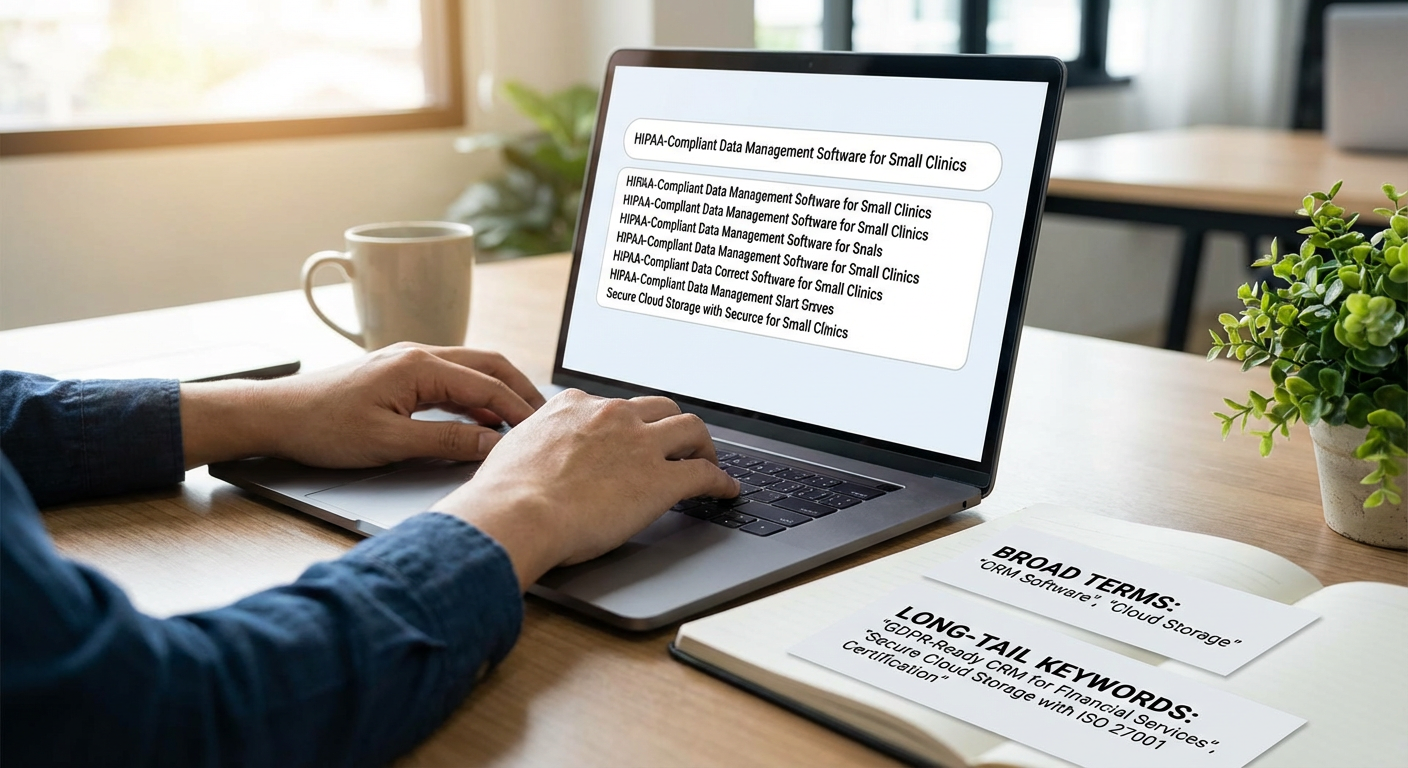
Keywords like “HIPAA compliant project management software for healthcare enterprises” or “SOC 2 certified CRM for financial services” speak directly to decision-makers who cannot compromise on regulatory requirements. These searches indicate buyers who have moved past general research and are actively vetting solutions against specific compliance frameworks. The conversion rate on these terms typically runs three to five times higher than broad alternatives because the searcher has already qualified themselves. Your content should address both the compliance features and the implementation process, as enterprise buyers need assurance on both fronts.
- Department-Specific Solution Queries
Phrases such as “procurement software for distributed manufacturing teams” or “contract management system for legal departments in multinational corporations” target specific functions within large organizations. These searches come from people who understand their department’s unique challenges and are looking for specialized solutions. When someone searches this specifically, they are often preparing a business case for stakeholders and need detailed information about implementation timelines, integration capabilities, and total cost of ownership. Building content around these terms requires deep knowledge of how different departments operate at scale.
- Integration-Focused Keywords
Terms like “inventory management that integrates with SAP and Salesforce” or “analytics platform with native Oracle database connectors” address a critical enterprise concern. Large organizations rarely replace their entire tech stack, which means new solutions must work within existing infrastructure. Buyers searching these terms have already identified their core systems and are looking for compatible options. Your landing pages should include detailed integration documentation, API capabilities, and case studies showing successful implementations with those specific platforms.
- User Volume and Licensing Queries
Keywords such as “collaboration platform pricing for 5000+ users” or “video conferencing solution for organizations with 10000 employees” signal enterprise-scale needs. These searchers are past the trial phase and are evaluating whether your pricing model makes sense at their scale. They want to understand volume discounts, concurrent user limitations, and how licensing works across subsidiaries or international offices. Content targeting these terms should transparently address pricing structure and include calculators or contact options for custom quotes.
- Multi-Region and Localization Searches
Phrases like “payroll software supporting 15 European countries with local tax compliance” or “e-learning platform with interface translation in 30 languages” come from organizations managing global operations. These buyers need solutions that handle regional variations in regulations, languages, and business practices. The complexity of their requirements means they will spend significant time evaluating options, and they are willing to pay premium prices for solutions that genuinely solve multi-region challenges. Your content should detail which regions you support and what localization features you offer.
- Implementation Timeline Keywords
Terms such as “ERP system with 90-day implementation for mid-market manufacturers” or “CRM migration services from legacy systems in under 6 months” address timeline concerns that matter greatly to enterprise buyers. Large organizations must plan implementations around fiscal calendars, busy seasons, and resource availability. When someone searches with specific timeframes, they have likely received pressure from leadership to solve a problem within a defined window. Content should realistically address what can be accomplished in various timeframes and what factors influence implementation speed.
- Security Certification Combinations
Keywords like “cloud storage with FedRAMP and ISO 27001 certification” or “communication platform meeting both GDPR and CCPA requirements” target buyers in heavily regulated industries. These specific certification combinations narrow the field considerably, and searchers using these terms have done their homework. They are often working from a checklist provided by their security or legal team. Your response content needs to be technically accurate and include links to audit reports, certification documents, and security whitepapers that their compliance teams can review.
- Vendor Migration and Replacement Terms
Phrases such as “alternatives to [competitor name] for enterprise with better API documentation” or “migration from [legacy system] to modern platform with data preservation” indicate active shopping behavior. These searchers have experience with a specific solution and are looking for something better. They understand the pain points of their current system and want assurance that switching will solve specific problems. Content should directly compare features, acknowledge migration challenges, and provide resources like data migration guides or dedicated support for switchers.
- Role-Based Access and Permissions Queries
Keywords like “document management with granular permissions for 50+ user roles” or “workflow automation with approval chains for complex organizational hierarchies” address governance concerns. Large organizations need sophisticated permission systems to maintain security and compliance while allowing appropriate access. Searchers using these terms are likely IT administrators or security professionals evaluating whether your system can match their organizational complexity. Technical documentation showing permission capabilities, audit trails, and user provisioning processes should be readily accessible.
- Uptime and SLA-Specific Searches
Terms such as “business intelligence platform with 99.99% uptime SLA and financial penalties” or “call center software with guaranteed sub-50ms latency” come from buyers who have experienced downtime costs. These organizations cannot afford service interruptions and need contractual guarantees. When someone searches this specifically, they are comparing SLA terms across vendors and will likely negotiate these points. Your content should clearly state your SLA offerings, explain your infrastructure redundancy, and provide historical uptime data.
- Training and Change Management Keywords
Phrases like “enterprise software with dedicated onboarding team and train-the-trainer programs” or “platform including change management consulting for large deployments” reflect concern about user adoption. Large organizations know that technology purchases fail without proper training. Searchers using these terms are evaluating the total cost of implementation, including the human side of change. Content should detail what training resources you provide, whether you offer certification programs, and how you support ongoing learning as your platform evolves.
- Industry-Specific Workflow Terminology
Keywords such as “claims processing automation for property and casualty insurers” or “clinical trial management system with FDA 21 CFR Part 11 compliance” use industry-specific language that broad searches miss. These terms attract buyers who work in specialized fields and need solutions built for their workflows. They are tired of generic software that requires extensive customization. Your content should demonstrate deep industry knowledge, use correct terminology, and show that you understand the specific regulatory and operational challenges of that sector.
- Data Residency and Sovereignty Queries
Terms like “customer data platform with guaranteed EU data residency” or “analytics solution with data centers in Canada for sovereign cloud requirements” address legal and regulatory concerns about where data is stored. Organizations in certain industries or countries face strict requirements about data location. Searchers using these terms need clear, accurate information about your infrastructure and cannot work with providers who store data in restricted jurisdictions. Documentation should specify exact data center locations and how data moves through your systems.
- Audit Trail and Reporting Requirements
Keywords such as “expense management with detailed audit logs for SOX compliance” or “access control system with tamper-proof reporting for regulatory reviews” come from organizations that face regular audits. These buyers need systems that automatically generate the reports their auditors require. They have likely struggled with previous solutions that made audit preparation painful. Content should show sample reports, explain how long data is retained, and detail what actions are logged. Case studies showing successful audits using your system add significant credibility.
- Disaster Recovery and Business Continuity Terms
Phrases like “backup solution with 4-hour recovery time objective for mission-critical databases” or “redundant infrastructure across three geographic regions with automatic failover” target organizations that have calculated the cost of downtime. These searchers need specific technical details about your disaster recovery capabilities. They want to know your recovery point objectives, how failover works, and what scenarios you have tested. Technical whitepapers and third-party disaster recovery certifications strengthen your position for these high-intent searches.
- Contract Terms and Procurement Language
Keywords such as “SaaS solution available through GSA Schedule for government procurement” or “software with flexible contract terms and annual renewal options for enterprises” reflect organizational buying processes. Large companies often must purchase through specific channels or follow defined procurement procedures. Searchers using these terms are trying to determine if working with you will fit their purchasing requirements. Content should clearly explain your contracting options, whether you work with procurement platforms, and what flexibility you offer on terms.
- Support Tier and Response Time Queries
Terms like “customer support with 1-hour response time for critical issues” or “dedicated account management for enterprise clients with quarterly business reviews” address post-purchase concerns. Organizations evaluating enterprise solutions know that support quality matters as much as product features. These searches come from buyers who have been burned by poor support in the past. Your content should detail support tiers, response time commitments, escalation procedures, and whether you provide dedicated resources for large accounts. Customer testimonials specifically about support experiences carry significant weight.
Enterprise buyers use long-tail keywords because they need precision. They are searching for solutions that match specific technical requirements, compliance standards, and operational constraints that broad terms cannot address. By building content around these detailed queries, you connect with buyers who are further along in their decision process and more likely to convert. Focus on providing the technical depth and specific information that enterprise searchers need, and you will see better results than chasing high-volume generic terms. The key is understanding that enterprise conversions happen when you can prove you understand the complexity of large-scale operations.
